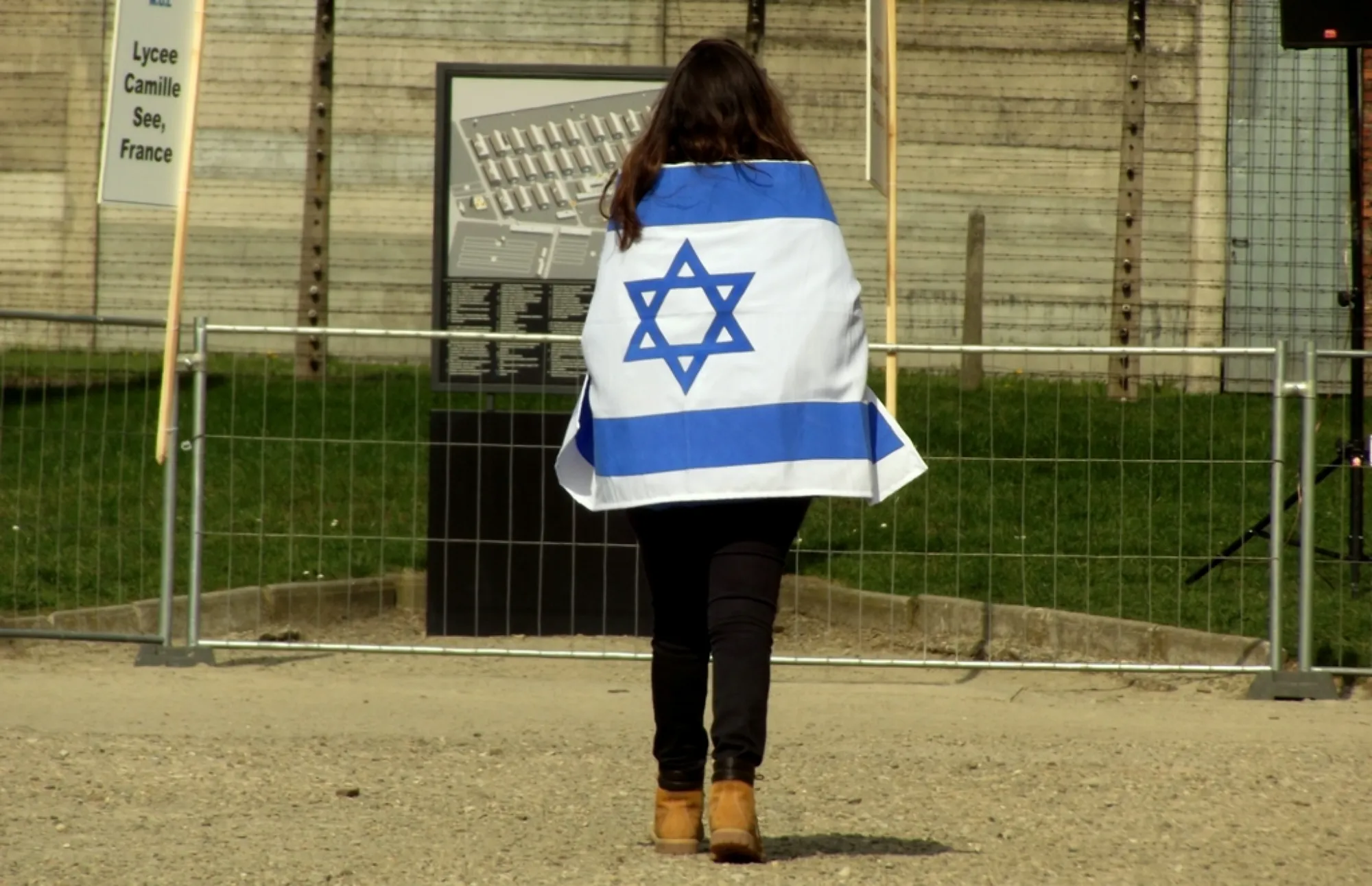
TEL-AVIV: Every year, in April, Yom HaShoah – Holocaust Remembrance and Heroism Day – is celebrated in Israel and in many places around the world. It is a time of reflection on the tragedy of the Holocaust and a tribute to the courage of those who resisted. For Poles, it is also a moment of reflection on shared history and the responsibility to remember.
.
.
Description of Content
.
What is Yom HaShoah?
Yom HaShoah, or the full name Yom HaZikaron laShoah we-laGevura (Hebrew: יום הזיכרון לשואה ולגבורה), is Israel’s national day of remembrance for Holocaust victims and heroes of the Jewish resistance. It is celebrated on the 27th day of the month of nisan according to the Hebrew calendar, which usually falls in April or May. In 2025, Yom HaShoah falls on April 23.
The day was established by the Knesset in 1951, and in 1959 was given the status of a public holiday. The date was chosen to fall near the anniversary of the outbreak of the Warsaw Ghetto Uprising (April 19, 1943), symbolizing both remembrance of the victims and heroism.
How is Yom HaShoah celebrated?
.
In Israel, Yom HaShoah begins the evening of the previous day. At 10:00 a.m., sirens sound throughout the country, and life freezes for two minutes – people stop, cars stand on the roads, and society is plunged into silence. This is a symbolic gesture of collective remembrance and respect for the six million Jews murdered during the Holocaust.
.
A formal ceremony is held at the Yad Vashem institute in Jerusalem with the participation of the highest state authorities.Six torches are lit, symbolizing the six million victims. Flags are lowered to half mast, and the media broadcast educational programs and documentaries on the Holocaust.
.
Yom HaShoah in Poland
.
Although Yom HaShoah is an Israeli holiday, commemorative ceremonies are also being held in Poland – the country that was the site of the greatest tragedies of the Holocaust. In Warsaw, flowers are laid and candles are lit at the Monument to the Ghetto Heroes. The POLIN Museum of the History of Polish Jews organizes educational events and exhibitions, recalling the fate of Polish Jews during World War II.
.
Marches of the Living – symbolic walkouts, often with the participation of young people, are also held in many cities to honor the memory of the victims and pass on history to future generations.
.
.
Why is it important for Poles?
.
Poland was home to one of the largest Jewish communities in Europe before World War II. The Holocaust destroyed that community almost completely. For Poles, the memory of the Holocaust is not only the history of the Jews, but also part of our common history. Many pre-war Jews, especially the intelligentsia, identified in part or fully with Polishness. Part of the Jewish community identified themselves as Poles of the Mosaic faith. For such prominent artists as Julian Tuwim and Gustawa Jarecka, Polish was the way they expressed their thoughts.
While remembering the victims, we also pay tribute to those Poles who risked their lives to help Jews, and to those who resisted the Nazi regime. This is also an opportunity to reflect on contemporary anti-Semitism and the need to build a society based on respect and tolerance.
Daffodils Action and Conference
The POLIN Museum of the History of Polish Jews this year organized another edition of the Daffodil Action, which aims to commemorate the Warsaw Ghetto Uprising and educate about the Holocaust. The action included workshops, lectures and film screenings, involving both young people and adults.
The Ministry of Justice, in cooperation with the Auschwitz-Birkenau Foundation and the Institute of Legal Studies of the Polish Academy of Sciences, organized a conference entitled. „Denial, distortion and disinformation. The truth about the Holocaust 80 years after the liberation of Auschwitz”. The event brought together experts, historians and representatives of the Jewish community to analyze the challenges of Holocaust remembrance in the world today.
The celebration of Yom HaShoah in Poland in 2025 was not only an opportunity to pay tribute to the victims of the Holocaust, but also to reflect on contemporary challenges related to historical memory, education and countering anti-Semitism.
How can we honor Yom HaShoah?
.
- Education: Learn about the history of the Holocaust, visit museums and memorials such as POLIN and Auschwitz-Birkenau.
- How can we celebrate Yom HaShoah?
- Participate in events: Take part in local ceremonies, remembrance marches or lectures.
- Reflect: Stop for a moment, light a candle, pray or just think about the victims and their families.
Yom HaShoah is not only a day of mourning, but also a reminder of the strength of the human spirit, courage and solidarity in the face of unimaginable evil. For Poles, it is a special occasion to reflect on our shared history and build a future based on memory.
Yom HaShoah is a day of mourning.
.
Article Yom HaShoah 2025 – Holocaust Remembrance Day. Why is it worth remembering? comes from Agencja Informacyjna.
Fot. Piotr Drabik / 24.04.2025